FIFA Faces a Reckoning as Pressure Mounts on Gianni Infantino
Just days ago, Gianni Infantino stood atop the football world. Fresh off the triumph of a successful World Cup and eyeing an unopposed march toward a fourth term as FIFA president, his position seemed impregnable . Letters of support backing his re-election had already been submitted from key confederations, and the path to March’s Congress in Morocco appeared smooth .
Now, after a tumultuous 48 hours that saw a secretive plan to sell the family silver spectacularly backfire, Infantino finds himself in the fight of his political life—abandoned by key allies, facing an unprecedented rebellion from the sport’s most powerful blocs, and confronted with calls for his resignation from prime ministers and football federations alike .
The Plan That Detonated a Crisis
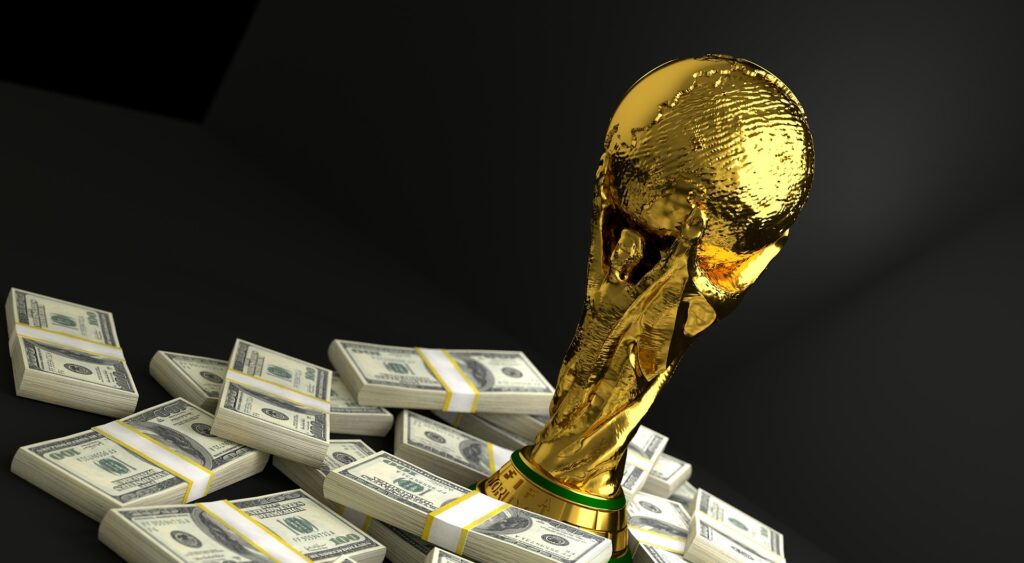
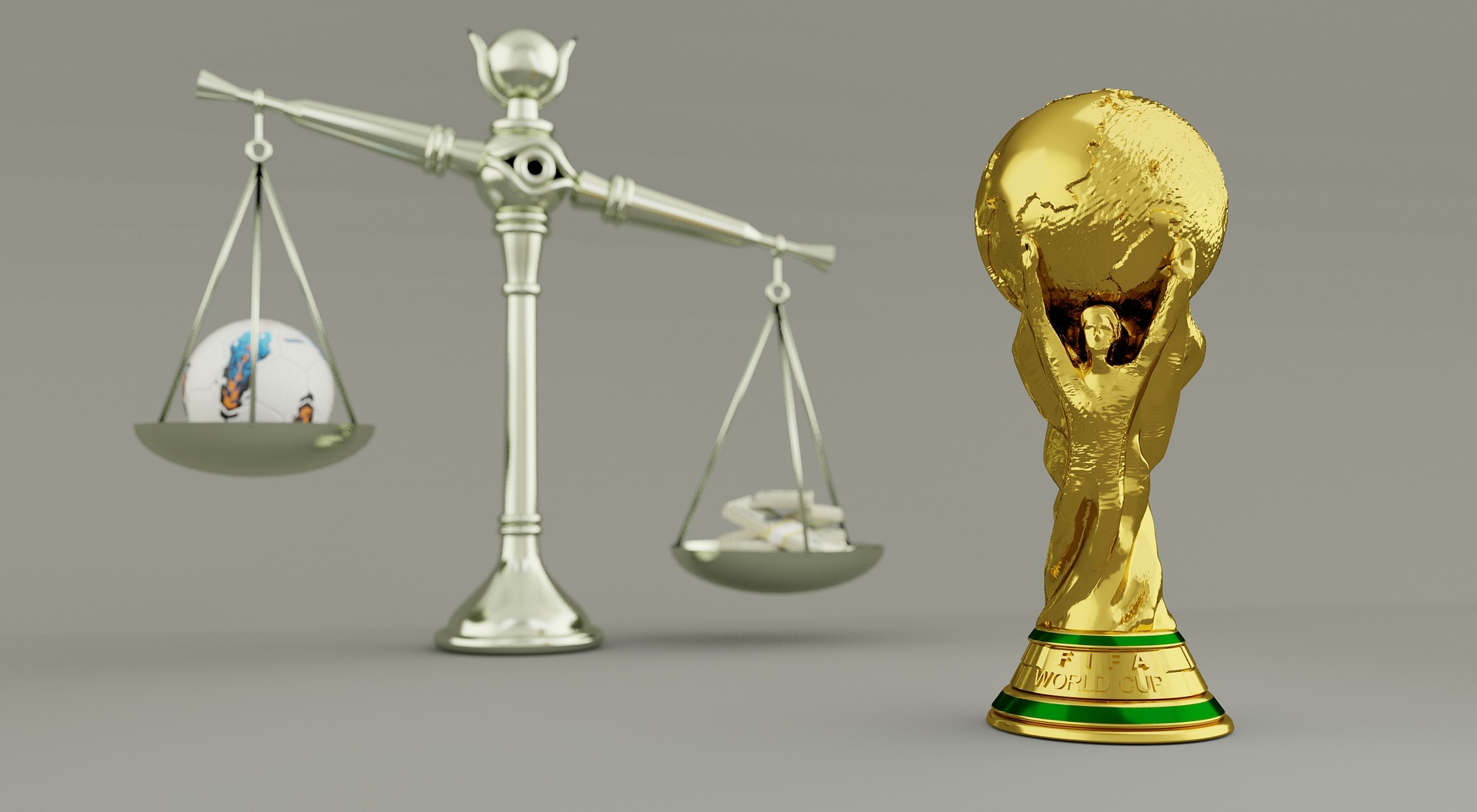
The crisis erupted on Tuesday with the revelation of a proposal to create FIFA Forward Enterprise (FFE)—a commercial subsidiary that would manage the media rights and sponsorship of its prime assets, including the men’s and women’s World Cups and the Club World Cup . A minority stake of up to 21% would be sold to private investment groups, with the aim of raising approximately $4.2 billion . The proposed investors were led by Thrive Eternal, a firm founded by Joshua Kushner—brother of U.S. President Donald Trump’s son-in-law, Jared—adding a layer of political sensitivity to an already controversial plan.
Infantino pitched the proposal as a financial game-changer, promising member associations a one-off payment of $20 million and significantly increased development funding for the 2027-2030 cycle, rising from $8 million to $20 million per association . For many of the 211 member associations, particularly smaller nations, this represented transformative investment. For the critics, however, the proposal represented a fundamental betrayal.
FIFA vigorously defended the plan, insisting that the new subsidiary would be an organization “that FIFA would own and control permanently” and that the commercial value created would be shared among all 211 member associations . The governing body pushed back against accusations of privatization, arguing that the additional revenues would stem from more effective management of commercial operations .
But the defense did little to quell the storm. Critics pointed to the rushed and secretive consultation process: the proposal was not formally disclosed to continental governing bodies and only became public through media reporting, with confederations given only 53 days to consider the plan . FIFA blamed “incorrect media reports” for disrupting the consultation, but the damage was already done .
A Revolt Across the Football World
The backlash was immediate, ferocious, and remarkably unified across confederations that rarely see eye-to-eye.
UEFA Draws a Line in the Sand: The European governing body led the charge, delivering a thunderous barrage of criticism. In a meeting on Thursday, all 55 UEFA members voted unanimously to boycott all FIFA competitions, including the World Cup, if the plan went ahead . UEFA accused Infantino of orchestrating a “shabby, back room, opaque deal” and warned that the World Cup “cannot be treated as an investment product” . “No part of it should ever be surrendered to private investors,” UEFA’s statement declared. “The World Cup is not for sale” .
CONCACAF Demands Accountability: The confederation that just co-hosted the most profitable World Cup in history followed suit, calling the proposal an “egregious act of poor governance and leadership” . Its 41 members rejected the proposal and, more damagingly, called for a “full review” into FIFA’s leadership . The statement was pointed: “A proposal of this magnitude does not reach that stage by accident. It is a symptom of leadership that has stopped putting football first” .
Asia Voices Deep Discontent: The Asian Football Confederation (AFC), led by Sheikh Salman bin Ebrahim Al Khalifa, was equally scathing. It called FIFA’s approach “totally unacceptable” and said the debacle had “exposed fundamental weaknesses in FIFA’s consultation and decision-making processes” . In an open letter to his regional body’s 47 member associations, Sheikh Salman declared that “the future of international football must always take shape through sound consultation, collective dialogue and respect for the established governance structures of our sport” . The AFC’s statement did not threaten a boycott but expressed solidarity with UEFA and CONCACAF .
The rebellion exposed deep fractures not just with rivals, but within Infantino’s own inner circle. His senior advisor, Carlos Cordeiro—who had been appointed by Trump as senior adviser to the White House Task Force on the 2026 World Cup—resigned in opposition, calling the plan “a bad deal for football” . Even more critically, FIFA’s own Chief Operating Officer, Kevin Lamour, stated that the administration had been “deceived” about the project, describing it as “the project of one person” . The resignation of these two senior figures, both long-time colleagues of Infantino, represented a stunning loss of internal confidence.
The Withdrawal: A Humiliating Climbdown
Faced with the collapse of support and the reality that he could not secure the required votes from the 211 member associations, Infantino was forced into a humiliating climbdown. On Saturday, he officially announced the proposal was dead .
In a statement, Infantino said: “Having listened carefully to all the views, it has become clear that the project has created divisions of a nature that, regardless of the level of support, are no longer in the interest of the objective set out in the first place” . He added: “Our purpose has always been—and will always be—to unite and improve. As a result, this proposal will not proceed” .
The announcement was framed as a victory for football, but for Infantino’s critics, it was far from the end of the story. In a scathing follow-up statement, UEFA made it clear they had lost all confidence in the FIFA president: “The current FIFA leadership has not only lost UEFA’s confidence but also that of many other members of the football family” . UEFA went further, arguing that Infantino had broken the promises he made in 2016 to be “transparent” and that FIFA’s money was “your money” and “not the money of the FIFA President.” “On both these promises, he has failed to deliver,” UEFA concluded .
CONCACAF insisted that “accountability cannot be optional” and that “a full review of this leadership must now take place” . The Football Association of England called for “a full and robust review of FIFA’s leadership and governance,” while the German FA demanded a “complete overhaul” within FIFA to ensure “a fundamentally different culture takes hold” . British Prime Minister Andy Burnham also joined the chorus calling for Infantino to step down .
The Road Ahead: How Could Infantino Be Ousted?
The battle has now shifted to Infantino’s future. Several avenues exist for his opponents to force him out, though each presents significant challenges .
1. Forced Resignation via the FIFA Council: The quickest route would be for Infantino himself to resign, as his predecessor Sepp Blatter did in 2015 . Alternatively, the 37-member FIFA Council could attempt to force his hand through an emergency meeting. Such a gathering would be triggered if 19 Council members call for one. UEFA has nine members, AFC has seven, CONCACAF has five, Africa has six, CONMEBOL has five, and Oceania has three, with Infantino and secretary general Mattias Grafstrom completing the body . While possible, BBC Sport understands there are doubts that the 19 votes could currently be achieved . Even if they were, Infantino could simply refuse to resign, adding pressure but not guaranteeing his removal.
2. Extraordinary Congress: UEFA has the power to trigger an extraordinary congress of the 211 member associations. This would require one-fifth (43 associations) to make a written request, a threshold UEFA can easily meet with its 55 members . Such a congress would take a minimum of two to three months from the point it is triggered . In effect, it would be a de facto vote of no confidence requiring 106 votes (a two-thirds majority) to pass. While UEFA has 55, Africa 54, Asia 46, CONCACAF 35, Oceania 11, and CONMEBOL 10, the arithmetic is not straightforward . Significantly, Africa, CONMEBOL, and Oceania have not publicly criticized Infantino’s plan .
Of the 136 countries that officially rejected the investment plan, not all would necessarily vote to remove Infantino—voting against a proposal is not the same as voting to end a presidency. Qatar has already publicly backed him, and Mexico has distanced itself from the joint CONCACAF statement . Morocco, co-host of the 2030 World Cup, also backed Infantino following his cancellation of the plan, and Egypt praised his decision . This suggests Infantino may be able to rebuild a coalition, at least among some member associations.
3. Fighting the March Election: The most likely scenario is that Infantino will attempt to hold on until the scheduled FIFA Congress in March 2027, where he is due to stand for re-election . However, the deadline for challengers to register is November 18, 2026, meaning the events of this week may have finally opened the door for a serious opposition candidate after years of unopposed elections . Infantino’s support base has been historically strong, having been re-elected unopposed in 2019 and 2023 . But the unified opposition from UEFA, CONCACAF, and the AFC—representing 90 of the 211 member associations—suggests this election could be different .
Who Could Replace Him?
If Infantino is forced out or defeated in an election, several names stand out as potential successors . Finding a unifying candidate who can attract support beyond their home confederation will be critical.
Victor Montagliani (CONCACAF President): The Canadian is considered the most likely candidate . Like Infantino, he was elected in 2016 promising governance reform. A former president of Canada Soccer, Montagliani was heavily involved in the buildup to and delivery of the 2026 World Cup, the first to be hosted by three nations . He is fluent in French, Italian, Spanish, and English, giving him a significant advantage in building cross-confederation alliances . Montagliani has never made a secret of his ambition to become FIFA president, and his position as a FIFA vice president puts him in a strong position to step up . If he can secure UEFA’s backing, his path becomes considerably clearer .
Sheikh Salman bin Ebrahim Al Khalifa (AFC President): The Bahraini royal is another strong contender . Initially elected as AFC president in 2013, he was re-elected unopposed for a fourth term to run to 2027 . Sheikh Salman was Infantino’s opponent in the 2016 FIFA presidential election, losing by 115 votes to 88, and may see this as his chance for redemption . He has the backing of a 47-member Asian confederation and has positioned himself as a fierce critic of Infantino’s leadership, signing off the AFC’s brutal takedown of how FIFA is being run . However, past controversies surrounding his name—including accusations of complicity with the Bahraini state in the repression of political opponents—could complicate another campaign .
Aleksander Ceferin (UEFA President): As the head of the biggest, richest, and most powerful confederation, Ceferin would hold serious sway should he stand . The Slovenian-born lawyer has been UEFA president since 2016 and has barely made a secret of his feelings about Infantino’s leadership . UEFA’s blistering statements, culminating in the declaration that it has “lost confidence” in Infantino, position Ceferin as the natural antidote . However, there are significant obstacles. Ceferin announced in 2024 that he would not seek re-election as UEFA president in 2027, citing a desire to spend more time with his family . More significantly, a European candidate might struggle to gain global support; it could appear that Europe is attempting to take over FIFA itself . The general feeling is that FIFA’s next president needs to be non-European .
Nasser Al-Khelaifi (PSG President and Chair of European Football Clubs): The Qatari businessman is arguably the most powerful club figure in European football . As president of Paris Saint-Germain, chair of European Football Clubs (formerly the G-14), and head of broadcaster beIN Media Group, Al-Khelaifi wields immense influence . He played a pivotal role in bringing European football back together after the ill-fated European Super League in 2021, and his PSG side won the UEFA Champions League in 2025 and defended it in 2026 . In theory, he would be a serious challenger, with connections spanning Europe and the Arab world . However, multiple sources close to Al-Khelaifi have insisted that he “genuinely, genuinely, genuinely doesn’t want the job” . Furthermore, Qatar’s public support for Infantino could be an issue, as could questions about potential conflicts of interest given his commercial ties .
Patrice Motsepe (CAF President): The South African billionaire businessman, with an estimated net worth of $3.7 billion, is an outsider for the role . He has held the presidency of the Confederation of African Football since 2021 and has reshaped African football, moving the Africa Cup of Nations from a biennial to a four-year cycle . However, CAF has faced its own governance embarrassments, including the farcical ending of the 2025 AFCON final where Senegal controversially left the field and Morocco was ultimately awarded the trophy after a review—a decision now before the Court of Arbitration for Sport . While Motsepe’s business credentials are strong, this recent turmoil may count against him .
Arsène Wenger (FIFA’s Chief of Global Football Development): The former Arsenal manager is a wildcard possibility . Wenger knows FIFA’s internal structure well and his football reputation is unquestionable, making him a potentially popular choice among supporters . However, leading FIFA requires more than sporting knowledge; it demands political alliances, negotiations between confederations, and the ability to navigate complex power structures . Wenger would face the toughest path to gathering enough support .
A Race to Repair or a Fight to the Death?
Infantino is now in a desperate race for survival. He is hoping that by scrapping the plan, he can begin to rebuild bridges and woo back his former allies . In his statement, he said his intent “was to bring all interested parties back together in the coming days and weeks” . He has already received public backing from Qatar, Morocco, and Egypt . The question is whether he can rebuild a winning coalition in time.
For UEFA and his other opponents, the question is whether they can capitalize on his moment of weakness. They have the political will to force a change, but they must find a unified candidate and secure enough global support to make a challenge viable . The arithmetic is challenging. To trigger a successful vote of no confidence, they need 106 votes. UEFA’s 55 and CONCACAF’s 35 are a strong base, but they would need significant support from other blocs to reach the target . Africa, CONMEBOL, and Oceania have not criticized Infantino’s plan, and winning them over would require a compelling candidate and a clear vision .
The upcoming months will be a chess match. The November 18 candidate deadline is a key date; if no serious challenger emerges by then, Infantino’s path to re-election becomes significantly easier . Conversely, if a unified opposition candidate emerges—likely Montagliani or Sheikh Salman—Infantino could face the first contested FIFA presidential election in over a decade.
As one senior football figure observed, in any normal organization, Infantino would likely be shown the door . But FIFA is no normal organization. The Swiss lawyer who was elected in 2016 to clean up an organization tainted by corruption has now found himself at the center of another governance crisis. The next few months will determine whether the events of this week mark the beginning of the end of the Gianni Infantino era, or whether he can once again demonstrate the political survival instincts that have kept him at the top of world football for a decade