
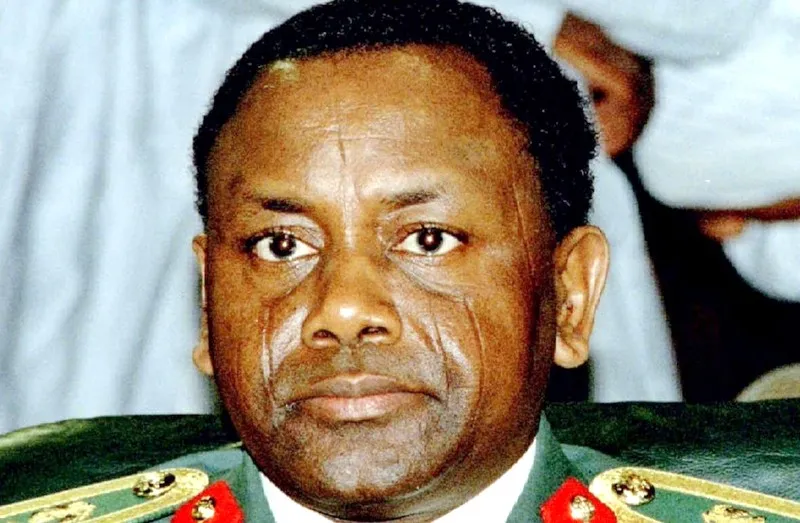
Abacha: Don’t tell lies about the dead, Al-Mustapha tells ex-DSS officer “
In a recent and strongly worded public statement that has reverberated across Nigeria’s political and media landscape, Colonel Hamza Al-Mustapha, the former Chief Security Officer to the late General Sani Abacha, Nigeria’s onetime military Head of State, has issued an urgent and impassioned appeal to a former officer of the Department of State Services (DSS) to immediately cease the dissemination of what he described as false, unsubstantiated, and deliberately misleading information regarding the late General Abacha. This intervention, which came amid a growing torrent of contentious debates and polarizing controversies surrounding the legacy and record of the late military ruler, was framed by Colonel Al-Mustapha not merely as a personal defense of his former principal, but as a broader moral and civic duty to safeguard historical truth and protect the integrity of Nigeria’s collective memory. Colonel Al-Mustapha, who is widely recognized for his decades-long close association with General Abacha and his unwavering, almost filial loyalty to the deceased leader, stressed with considerable gravity the profound importance of honoring and respecting the memory of those who have passed away, cautioning that the fabrication, distortion, and reckless propagation of unverified anecdotes not only dishonor the individual in question but also risk undermining the very foundations of historical truth and national cohesion, which remain fragile in a country still grappling with the legacies of its turbulent past.
The immediate backdrop to this strongly worded statement is a series of recent claims and counterclaims made by various actors across Nigeria’s fractured public sphere, including former government officials, retired security personnel, active-duty intelligence operatives, political commentators, academic historians, and civil society activists, all of whom have presented sharply conflicting and often mutually exclusive narratives about General Abacha’s protracted tenure in power from 1993 to 1998. These narratives frequently include grave allegations of large-scale corruption, systemic human rights violations, extrajudicial killings, the suppression of press freedom, the harassment of political opponents, and other highly contentious issues that have continued to polarize public opinion not only within Nigeria but also among international observers and diaspora communities. Some of these accounts have been published in memoirs, feature-length documentaries, newspaper opinion pieces, and social media threads, each vying for public credence and each contributing to an increasingly cacophonous and confusing historical record. Colonel Al-Mustapha’s intervention, therefore, comes as a timely and urgent call for measured reflection, disciplined research, and responsible public discourse, emphasizing with unmistakable clarity that all parties—regardless of their political leanings or personal grievances—must substantiate their assertions with credible, verifiable, and cross-referenced evidence before committing them to the public domain. He warned, in emphatic terms, that the unchecked, viral, and often sensationalized spread of misinformation, half-truths, and outright fabrications could dangerously mislead the Nigerian populace, erode public trust in institutions, sow deep distrust among the country’s diverse ethnic and religious communities, and ultimately threaten the fragile unity and social fabric of a nation that has already endured decades of military interventions, civil war, and recurring intercommunal violence.
In the main body of his statement, which was delivered through a combination of a written press release and a series of televised interviews, Colonel Al-Mustapha made a heartfelt and sweeping appeal to all Nigerians—irrespective of their age, region, religion, or political affiliation—to prioritize truthfulness, intellectual honesty, and moral integrity in recounting the historical events, policies, and personalities linked to General Abacha’s regime. He articulated, with considerable rhetorical force, that the propagation of unverified, one-sided, and sensationalized stories serves no constructive purpose other than to deepen existing societal divisions, reopen old wounds, and hinder the already painstaking process of national reconciliation and transitional justice that Nigeria has been attempting to navigate since the return to civilian rule in 1999. By contrast, he argued, a steadfast and collective commitment to truthful, nuanced, and evidence-based narratives can promote genuine understanding, foster intergenerational healing, and cultivate a more balanced, sober, and appreciative assessment of Nigeria’s complex and often tragic political history. He urged former colleagues from the military and security establishments, professional historians, investigative journalists, documentary filmmakers, academic researchers, civil society leaders, traditional rulers, and the general public to engage in open, respectful, and fact-grounded dialogue, while avoiding the all-too-common pitfalls of rhetorical excess, partisan axe-grinding, and sensationalism that could easily inflame ethnic tensions, perpetuate mutual misunderstandings, or derail ongoing efforts at democratic consolidation and national development.
Furthermore, Colonel Al-Mustapha took considerable care to reiterate his personal loyalty to the memory of General Sani Abacha, describing it not as a blind or uncritical devotion but as a principled and unwavering commitment rooted in years of dedicated, round-the-clock service at the highest levels of state security. He expressed, in deeply emotional language, his resolute determination to continue defending the reputation, legacy, and historical standing of the late leader against what he characterized as persistent distortions, malicious defamatory attacks, and opportunistic character assassinations that have emerged from various quarters over the past two decades. According to his carefully articulated perspective, the legacy of General Abacha should be evaluated with fairness, balance, and historical context—acknowledging, on the one hand, his tangible contributions to Nigeria’s infrastructure development, economic planning, and regional diplomatic influence, while also recognizing, on the other hand, the undeniable challenges, controversies, and human costs associated with his authoritarian administrative style. He called for a mature, multidimensional approach that recognizes the inherent complexity of historical figures, particularly those who wielded immense state power during periods of national turbulence, rather than reducing them to one-dimensional caricatures, villainous archetypes, or saintly saviors, as shaped by partisan interests, ethnic chauvinism, or short-term political expediency. He insisted that only through such balanced and dispassionate scrutiny can Nigeria ever hope to arrive at a truthful and instructive accounting of its past, one that avoids both hagiography and demonization.
The former Chief Security Officer also expanded his remarks to address the broader implications of the ongoing controversies, emphasizing with considerable urgency that Nigeria’s collective future—its economic prosperity, social stability, and democratic resilience—depends fundamentally on unity, mutual respect, and a shared sense of national purpose. He warned, in sobering terms, that continuously revisiting the past through a lens of hostility, revenge, and division could exacerbate existing societal fractures, reignite dormant communal conflicts, and paralyze the country’s ability to confront pressing contemporary challenges such as poverty, unemployment, insurgency, banditry, and climate change. Instead, he advocated for a forward-looking, constructive, and reconciliatory perspective that learns judiciously from history—acknowledging both its triumphs and its tragedies—while focusing the nation’s collective energy on building a stable, inclusive, prosperous, and just society for all Nigerians, regardless of their ethnic, religious, or regional backgrounds. He stressed that young Nigerians, who constitute the overwhelming majority of the population, deserve a future unburdened by the endless recycling of old grievances, and that the nation’s leadership, media, and educational institutions bear a special responsibility to frame historical discourse in ways that inspire hope, civic virtue, and active citizenship rather than despair, cynicism, or sectarian animosity.
Colonel Al-Mustapha’s statement has, unsurprisingly, sparked considerable discussion, debate, and even heated argument across various media platforms—including traditional print newspapers, 24-hour television news channels, popular radio talk shows, and a vast ecosystem of social media networks such as Twitter, Facebook, Instagram, and WhatsApp. Among his supporters—many of whom are former military colleagues, northern political elites, and those who benefitted from the Abacha administration—there is widespread praise for his call for respect, dignity, and historical accuracy, with many echoing his sentiment that the dead should be allowed to rest in peace and that their contributions should not be casually erased or maligned by those with partisan axes to grind. Conversely, his critics—including human rights activists, democracy advocates, victims’ families, and a younger generation of Nigerians who grew up in the post-military era—have argued that some aspects of General Abacha’s rule, particularly the documented cases of political assassinations, the annulment of the June 12, 1993 presidential election, and the extensive looting of public funds, warrant continued scrutiny, accountability, and even judicial redress, regardless of the passage of time. They contend that truth and reconciliation cannot be achieved by silencing uncomfortable facts or by appealing to a vague sense of national unity that overlooks genuine grievances. Nevertheless, regardless of where one stands on this ideological spectrum, Colonel Al-Mustapha’s remarks serve as a significant and sobering reminder of the immense power of narratives in shaping public consciousness, the ethical responsibilities that accompany the act of recounting history, and the delicate balance that must be struck between honoring the past and building a viable future.
In his concluding remarks, Colonel Al-Mustapha returned to his central theme of truthfulness, urging all Nigerians to resist the temptation of convenience, partisanship, or sensationalism when engaging with the nation’s difficult historical episodes. He called upon the former DSS officer, in particular, to retract his alleged false statements and to join in a collective effort to document Nigeria’s history with rigor, transparency, and mutual respect. He also appealed to religious leaders, traditional rulers, and community elders to use their moral authority to promote peace and understanding, reminding them that the dead cannot defend themselves and that the living therefore bear a sacred obligation to speak on their behalf with honesty and compassion. He concluded with a philosophical reflection on the transience of human life and the permanence of historical judgment, asserting that while political regimes rise and fall, the truth—however inconvenient—endures and ultimately serves as the bedrock of any meaningful national narrative. His final words were a plea for Nigerians to look beyond their immediate differences and to embrace a shared destiny, one that honors the memory of all past leaders, both flawed and virtuous, while committing unequivocally to the democratic, developmental, and social aspirations of the 21st century. Through his unwavering defense of Abacha’s legacy, his call for factual rigor, and his appeal for national harmony, Colonel Al-Mustapha invites all stakeholders—government, civil society, media, academia, and ordinary citizens—to engage in responsible, evidence-based, and forward-looking dialogue that honors not only the truth but also the collective memory, resilience, and potential of the Nigerian nation as it continues its long and arduous journey toward lasting peace, democratic consolidation, and shared prosperity.